Sunday, February 27, 2011

Digital Photography Home-Business Opportunities


Cuba Gallery: New Zealand / landscape / mountains / lake / nature / water / photography by ►CubaGallery


Photo Credit: celtics baby clothes


For the next seven years, digital photography is forecasted to remain steady as a job opportunity for those that are interested in this field. While the competition is expected be strong amongst photographers and the demand for jobs will fall below the number of photographers there are expected to emerge in this field.

The most successful photographers exhibit traits in being creative, able to adapt rapidly to technology changes, and management proficiency. There are digital photography business courses available to help you gain the competitive edge. You will be able to start your own full or part-time business when you develop a good business sens and keep up-to-date on the rapidly changing technology.

There are many areas that you can pursue in a digital photography home business. I will cover a few of the areas for digital photography businesses.

Real Estate
Each year there are millions of homes sold in the US and real estate agents use at least one picture to advertise the property online, in magazines, in brochures, and in newspapers. As a digital photographer you could earn $50 to $100 a house working with real estate agents or others involved in real estate.

Portraits
There are many locations that you can use for a photo shoot. Many people like to have a professional portrait done of themselves for various reasons. The common charge for a shoot is $100 per hour and an additional $50 to $100 for prints and enlargements. There is also a strong demand for pet and children's portraits.

Sports
Being a photographer for sporting events can be profitable and exhilarating. As a sports photographer, you can submit your photos to event organizations, to participants and publications, local news agencies, and a variety of other types of news and sporting sites. The local minor league teams could pay $50 to $200 for team photos with extra sales potential for prints, premium items such as photo trading cards, T-shirts, and reprint. Do not forget your local school teams either as there is a hidden potential for a photo shoot for these teams.

Commercials
Every year there are billions of dollars spent on product advertisements. Commercial photography is normally limited to the more experienced photographers who can charges as much as $2,500 a day for high end product shots. There is also an opportunity for those that can also do shoots for the local chamber of commerce for their websites, local businesses for websites, and a wide array of other ways to earn as a commercial photographer.

Glamour
There are many beauty salons, hair dressers, and modeling agencies that use photos to help promote their services and products. While it is not uncommon for them to pay more than $150 an hour for promotional shoots with images that can be used for brochures, online advertising, point of sale materials, and business cards. There is an opportunity for those that wish to have photos of their staff and customers photographed for in house promotions or for conventions.

Stock Photography
There are agencies that specialize in stock photos that they resell to business for promotional purposes. For you to have your work listed with them they normally require a minimum submission of 300 to 500 photographs. As a stock photographer you can submit photos such as travel photos, landscape, people, animals, still life, and various other types of images that will appeal to their customers. The commissions for stock photographers can range from $5 to $100 for images that their customers purchase through their agencies.

News and Events
Many local newspapers, magazines, and newscasts often look for interesting human interest stories and pictures. The requirements for each of the types of periodicals will vary, but it is possible to have your pictures published, receive credit as a tag line, and possibly a payment for your photo.

Wedding Photography
There are photographers who will establish a wedding package of 25 to 40 prints that will retail for $1,500 to $3000. Normally this a type of shoot will take two days to work, the first day is to shoot the event and the second day is to process and prepare the album.

Graduation
There are parents who wish to have a professional photograph took of their graduate walking down the aisle and across the stage at graduation. The charges for photos could range from $5 to $10.

Tips for Your Commercial Photography Portfolio


Cuba Gallery: Summer / wave / ocean / sea / beach / natural light / water ripple / photography by ►CubaGallery


photo source


A great commercial photography portfolio is your calling card in the industry, and your ticket to winning clients and landing jobs as a professional photographer. Read on to learn 3 key tips that will help make your commercial photography portfolio shine, so prepare to start getting the gigs you need to advance your career. These commercial photography portfolio tips will take your clips to the next level, so that you can scale the ladder to your dream job.

1. Offer Your Commercial Photography Portfolio In A Variety Of Formats

When you hand out your commercial photography portfolio, one of the things it is crucial to communicate to a client is that when they hire you, you will do everything you can to make his or her life easy. You want to be seen as professional and responsive, and as someone who proactively anticipates your client's needs. One great way to make this impression fast is to have your commercial photography portfolio available in a number of formats, including in print, on CD, and online, as AllArtSchools suggests. When you follow this advice and have print, digital, and virtual clips available, your first question to a client can always be "What's easiest for you?", a sentence that will be music to any prospective employer's ears.

2. Pitch Your Commercial Photography Portfolio Directly To The Job At Hand.

Instead of having one commercial photography portfolio, have several, one targeted to each kind of work you're hoping to do in your career. Have you taken some gorgeous nature images? That's great, but a client who's hiring for a fashion shoot won't care! A prospective employer will hire the person who seems most likely to do a great job on the specific project at hand, so make sure everything in the commercial photography portfolio you hand to a possible client is directly relevant to the task they'll need you to do. Try doing as PhotoCritic suggests, and put together a portfolio of just your fashion work, another that highlights your nature shots, another for photos you've taken of products, and so on for each genre you've got clips for, and are seeking work in. That way, as you move forward in applying for a variety of jobs, you'll always have your most specifically relevant work at your fingertips, ready to impress your next boss.

3. Include The Right Written Information In Your Commercial Photography Portfolio.

As Marketing For Photographers and Photography points out, you don't need to include much written information in your commercial photography portfolio. However, what you do put in can make or break a client's interest in your work. By reducing the amount of text, you help keep your prospective employer engaged with the images you're presenting, which is the goal of your commercial photography portfolio. You don't need to put forward the technical information for each picture, like your equipment choices or shutter speed, because the client only cares about your end result, not about the road you took to get the shot. You should offer a brief description of what each picture is, to provide some context, and a clean, professional, and specific title for each shot, so that it's easy for clients to reference a particular image in your commercial photography portfolio when they're in discussion with you, or with any colleagues who may be involved in making the decision to hire you.


Saturday, February 26, 2011

Christmas Light Photography Tips and Advice


Edinburgh Photography, Camera Obscura by John Gilchrist


source,source


We're out taking photographs of Christmas lights. There are so many beautiful displays, and we want to capture them on film. So as we prepare to take our pictures of Christmas lights, we back away so that we can capture the entire magnificent scene within our frame.

Correct. But also incorrect, if that's all we do. And this leads to our first Christmas photography tip for illustrating Christmas light displays.

(1) The best Christmas lights photography captures not only panoramic scenes, but also close-ups of the highlights within the panorama. We want both. Let's say that on the sprawling front lawn of a suburban home, we see Santa on his sleigh in one location, and a Salvation Army bell-ringer in a second spot, and a nativity scene someplace else. In addition to our distant Christmas photograph, we can also zero in on each of those three highlights.

(2) Opt for a high shutter speed. We want to illustrate the lights, not the light that they emit. A wide angle lens is for the panorama, and a macro lens is for the close-ups.

(3) Those Christmas light displays are so brilliant in the deep, dark, Silent Night. Maybe so, but our Christmas photography will be lousy at that point. Our photos will show the lights, but not the property in the background. Or, we'll see the property but we won't clearly see the lights, so to speak. Our best bets are at dusk or at dawn, and overcast usually is better than clear sky.

(4) If we're really dedicated and sticklers for perfection, we'll shoot our Christmas photography both at dusk and at dawn. Great photography of any sort is trial and error. Furthermore, if we show up maybe a half-hour before the optimal time, then we can plan our logistics and our camera angles, so that we're ready when the time is right. Extra time = excellence in our Christmas photography.

(5) Let's see here. We have the lights. We have the various props that go with the lights, such as the nativity scenes or Santa on his sleigh. We have the property in the background. Aren't we forgetting something? Oh yes, the sky. The sky! Look at examples of Christmas lights photography that impress you (or even thrill you) the most, and odds are that the sky will play a prominent role. Seek an angle at dusk that shows an afterglow in the evening sky. To include more sky, shoot from a low angle, upward toward the Christmas lighting display and toward the sky.

(6) People. Where are the people? Just because your subject is Christmas lights photography, that doesn't mean the scene must be devoid of people. Have some children pose in the scene, or better yet, just tell them to go ahead and frolic. This can add a unique element to your Christmas lights photography.

SOURCES

http://www.intofotos.com/photography/2007/11/10/how-to-photograph-christmas-lights/

http://strobist.blogspot.com/2006/12/how-to-photograph-christmas-lights.html

http://www.slrphotographyguide.com/tips/christmas-lights.shtml

Photography Tips and Tricks


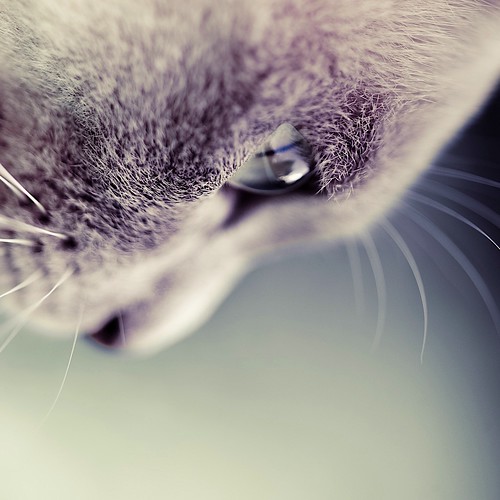
Cuba Gallery: Cat / pets / animals / eyes / kitten / cute / photography by ►CubaGallery


credit


Photography isn't just about making memories, it's about art. Be artistic. Here are a few tips and tricks to help you make those photos, picture perfect.

To make those dull photos turn into works of art, consider these questions:
Decide if you want the full subject, half, or even a close up. How much background do you want, or even foreground? Exactly how close do you want that close up? What details do you want to focus on? Do you want a vertical, horizontal, or tilted photograph? What angle do you want? What's the best lighting? What background do you want to use?

1. Placing the subject of interest. Choose how much of the subject you want photographed. (Example: you want full body, half body, or face shot.) If your subject fills the frame then it's okay to center it. If you are trying to get more of the background, try placing your subject to the right or left in the viewfinder. With a horizontal (laying down), try to place them at the top for more foreground, or at the bottom for more background. And you could even tilt the camera for a more funky picture. It all depends on what part of the scenery you want visible in the picture. Maybe you want that tree to your left and your subject to the right. Or the patch of flowers in front and the mountains in back. (I find it best to take my time and take shots of each possible way and several different poses. This way I know I'll find the best photograph with the most potential.)

2. Don't center. The circle, plus sign, or brackets in the middle of your viewfinder is for focusing and isn't necessarily for centering the subject. Placing your subject in t he circle could leave you with a lot of empty and useless space on your photograph. Too much background and not enough subject. If your subject fills the frame then it is okay to center them. (Sometimes you just have to ignore the focus points and concentrate on your subjects placement in the frame instead.)

3. Camera angles. Walk around the subject, shoot from all angles and sides. This will help you to get the best lighting, background, and different aspects of the subject. You will want to find the best angle for all three. Pick a background that will not distract your viewers from the subject of interest. (I choose my backgrounds to where there's not much clutter. Sometimes I will use a plain sheet or blanket and place it behind the subject, but making sure it does not clash or blend.)

4. Reflectors. In some situations you just can't get enough light or you perhaps you just want more. To use a light reflector, place it in a position where it reflects light onto the subject without it getting in the frame. Use this if your shot is coming out too dark or there are too many shadows. On night shots that you need more than your flash can put out, place a lamp (or several) near your subject, but out of sight, and use the light reflectors to bounce from the lamps to where needed. (Some homemade light reflectors can be real cheap to make. You could use white cardboard, or if you can't find this, then simply take any piece and paint it white. For more light, place tin foil over your piece of cardboard, smooth it out, and reflect where needed.)

5. Shading. Using the same piece of cardboard as mentioned above, you can use this to block the light as well. You could make this easier by painting one side white and the other black. Or just place the piece in front of the lamp or sun to dismiss light from your subject. On most cameras you can use a sunshade for the lens, some cameras come with this, some you buy separate. This won't keep light from your subject, but it will block the light from causing a flare effect on the outcome of your photograph. The sunshade just clicks into place around your lens, and keeps the lens safe from any glaring.

6. Outside daylight. Direct sunlight is when you place the sun behind the camera, but in front of the subject. Using direct sunlight can cause shadows on the subjects face and possibly their eyes squinting. Back light is when the sun is behind the subject and in front of the camera. This will lighten the photo and cause much softer features on the subject.

7. Preventing red eye. Red eye is caused when the flash is too close to the lens. Ways to prevent this are: Attach a larger flash to your camera, t his way the flash is further from the lens. Or if buying a camera, look for one with the flash located far from the lens. Try getting closer to your subject when needing the flash. (Before I bought my camera with built in red eye correction, I had to use a photo editing program to correct these problems. I was even scanning my pictures and still having to edit when I was using my film camera that was hopeless against red eye.)